


Can you Drive to Brazil?

You can drive to Brazil from 8 of the 10 South American countries with which it shares a border. These countries are Argentina, Bolivia, French Guyana, Guyana, Paraguay, Peru, Uruguay and Venezuela. Due to the thick, impenetrable rainforest of the Amazon basin, there are no road routes between Brazil and Colombia or Suriname, so you’ll need to use an alternative route.

It’s also possible to drive to Brazil as part of a Pan-American road trip using the Pan-American Highway. Commencing in Prudhoe Bay in Alaska, the network of roads that form the Pan American Highway runs through to Ushuaia in Argentina. Depending on the route you want to take, you can use this road for most of your trip before turning off to enter Brazil via its numerous border crossings. 

Where is Brazil Located?

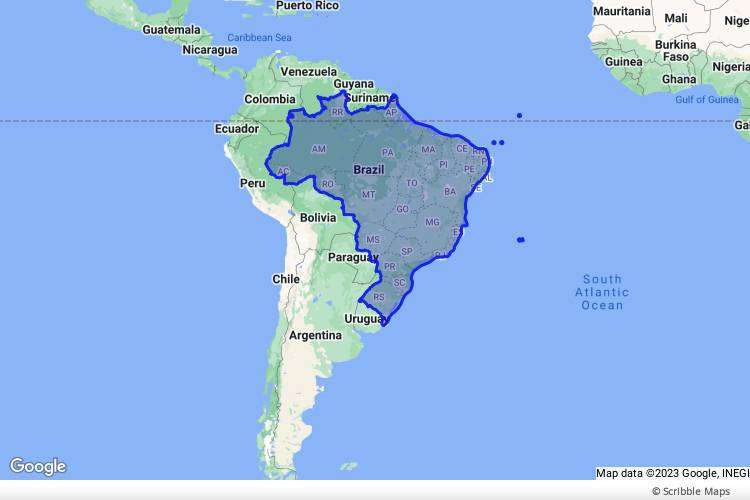
Brazil is located in South America and is the largest country on the continent. It’s also the most populous, with over 214 million residents. Brazil’s size and far-reaching geography mean that it shares borders with all but two of the other countries of South America. Only Ecuador and Chile fail to share a common border with Brazil.  

Map showing location of Brazil

How to get to Brazil

There’s a whole multitude of different ways to get to Brazil. With 10 neighboring countries, of which 8 have open land borders, there’s no shortage of land options available. If traveling by road in Colombia or Suriname, you must travel into Brazil via a neighboring country.

There’s also a huge range of different flight options available for Brazil. Various airlines fly into a large number of different airports across the country. Note there’s very little in the way of budget air travel in South America, so anticipate paying higher costs than you would in other continents.

For those not in a rush, there are also several options to travel to Brazil by river. We’ll take a look at each of the different travel options below.

Brazil by Road

Argentina

There are 5 major border crossings between Brazil and Argentina. The most common and popular among travelers is located at Puerto Iguazú given its close vicinity to Iguazu Falls. The other major crossing is at Barracão, halfway along the border between the two countries. These border crossings allow international vehicles to transit to and from Brazil. 

Bolivia

There’s a single border between Bolivia and Brazil. Located between the towns of Corumbá (Brazil) and Puerto Quijarro (Bolivia), it’s a relatively straightforward crossing. International and domestic vehicles are permitted to cross here. It’s best to arrive early as it can be very busy. 

French Guyana

There’s just a single border crossing between Brazil and French Guyana. It’s located in the town of Oiapoque (Oyapock in French). After obtaining exit stamps, most visitors take a short boat ride across the river before completing immigration formalities on the other bank. However, there’s also a bridge at this location, which is open periodically if traveling with your vehicle.

Guyana

There’s a single border crossing between Brazil and Guyana, between the towns of Lethem (Guyana) and Bonfim (Brazil). Separated by the Takutu River, this is the only official border between the two countries. Immigration offices are located on either end of the Takutu Bridge, the only way to travel between the two countries. 

Paraguay

There’s a host of different border crossings between Paraguay and Brazil. One of the busiest crossings is Pedro Juan Caballero in the center of the country. However, the most popular for visitors is at Ciudad del Este. This town straddles the Paraguay/Brazil border and is home to the spectacular Iguazu Falls. Visitors mainly come here to see the falls from one side before crossing the Bridge of Friendship to view from the other side before continuing their journey. The bridge accommodates both vehicle and pedestrian traffic. 

Peru

In the west of Brazil, there is a remote border crossing with Peru. It’s known as the Iñapari Border Crossing between the Brazilian town of Assis and the Peruvian village of Iñapari. While the road is paved on both sides of the border, the crossing is a very, very long way from anywhere meaningful in either Peru or Brazil.

Uruguay

There are multiple border crossings between Brazil and Uruguay, all of which support international vehicle arrivals and departures. The most popular and convenient crossing is near the Atlantic coast in Chui (Brazil) / Chuy (Uruguay). It’s conveniently located for travelers coming from Montevideo and heading towards Port Alegre. 

Venezuela

Despite a substantial 2200 km border between Brazil and Venezuela, there’s only one border crossing between the two countries. It’s located next to the Brazilian town of Pacaraima. The closest town in Venezuela is Santa Elena de Uairen. This is a very remote crossing that’s a long way from any major centers in either Venezuela or Brazil.

Aerial view of Christ the Redeemer Statue overlooking Rio de Janeiro
Statue of Christ the Redeemer overlooking Rio de Janeiro

Brazil by Air

There’s a huge number of both domestic and international airports in Brazil. Brasilia Airport, Belo Horizonte Tancredo Neves Airport, Recife Guararapes Airport, Porto Alegre Airport, and Salvador Bahia Airport are the biggest and busiest. 

Between these airports, they offer direct flights to other South American countries, North America, Africa, Asia, Australasia, and Europe. They also service a network of smaller domestic airports and some remote landing strips in the Amazon basin.

Brazil by Boat

It’s possible to travel to Brazil by boat from several different locations. However, these services only offer passenger services and do not carry vehicles. If traveling overland with a vehicle, you’ll need to use one of the numerous border crossings by road. 

The first of these river crossings has been detailed above and is between French Guyana and Brazil. While a large bridge also exists at the border and connects the two countries, most travelers continue to take the short boat ride across the river. 

Peru is another neighboring country where you can sail into Brazil. The Amazon River connects Peru and Brazil, and it’s possible to sail from Iquitos in Peru to Manaus in Brazil. The series of ferries you would need to take via Santa Rosa, Tabatinga, and Jutai would take around 60 hours.  

Can you Drive to Brazil from the U.S?

You can drive to Brazil from the U.S. using the network of roads collectively known as the Pan-American Highway. This route will take you through Mexico and the countries of Central America before crossing from Panama into Colombia. This part of the journey is the most troublesome and costly as you can’t drive from Panama into Colombia. The impenetrable Darién Gap region means you need to ship your car from Panama to Colombia. Further details on how to travel to South America are featured in our blog post.

Once in Colombia, you must decide whether to head east into Venezuela or south into Peru. The decision is likely to be influenced by your final destination as the distances involved are significant. The table below shows the driving distance from major U.S. cities to major Brazilian cities. 

Starting Point

Destination

Driving Distance

Driving Time

New York

Manaus

6627 miles

140 hours

Los Angeles

Manaus

6257 miles

134 hours

Chicago

Manaus

6083 miles

132 hours

New York

Salvador

9637 miles

204 hours

Los Angeles

Salvador

9267 miles

198 hours

Chicago

Salvador

9093 miles

196 hours

New York

Rio de Janeiro

9283 miles

196 hours

Los Angeles

Rio de Janeiro

8913 miles

190 hours

Chicago

Rio de Janeiro

8739 miles

188 hours

Can you Drive in Brazil?

Any foreign national is permitted to drive in Brazil for up to 180 days, providing they hold a valid driving license from their home country. In addition to the driving license, they must also:

  • Have a valid passport 
  • Be 18 years old or over


There is no formal requirement for an International Driving Permit (IDP) however, it might make things easier if you’re stopped and have one. Alternatively, a translation of your home driving license would also be useful. 

View of the impressive Iguazu falls
The Iguazu Falls are the largest waterfall system in the world

Is it Safe to Drive in Brazil?

There’s no denying that Brazil is one of the most challenging countries to drive in. The country’s sheer size and scale mean that it encompasses a whole range of different road conditions. While the major highways that link the main cities tend to be in good condition, inner city, and rural roads can be much more challenging.

The good news is that with proper planning and the right precautions, you can mitigate many of the risks of driving in Brazil.

The following are the biggest challenges when driving in Brazil:

  1. Armed robbery/carjacking – This issue is generally isolated to the busy centers of large cities. To mitigate the risk, avoid driving in downtown areas and don’t drive in these areas at night.
  2. Poor road conditions – This issue is mainly relevant to remote rural areas and some poorer urban regions. Be mindful of potholes and other hazards. 
  3. Huge traffic jams – Major urban centers such as Rio de Janeiro, São Paulo, and Brasilia can suffer horrendous traffic jams. The frustrations caused by these traffic jams can often prompt drivers to undertake risky or reckless maneuvers.
  4. Trucks – Brazil is a country that’s rich in natural resources, and you’ll see a lot of very large trucks on the road. In Brazil, truck drivers are known for poor driving and lack of awareness of other vehicles. Proceed with caution when passing a truck, particularly on rural roads. 
  5. Lack of road signs and marking – Maintaining Brazil’s extensive road network is quite challenging. This means that roads can be of dubious quality, and road markings will often be absent. In rural settings, road signs are often non-existent, which provides another challenge. 

Related Content

Can you Drive to Argentina?

Can you Drive to Colombia?

South America Overland

Can you Drive to Peru?

Can you Drive to Chile?

Latest Blog Posts

Can you Drive to Morocco?

You can drive to Morocco from the neighboring countries of Spain and Mauritania, but not Algeria, despite a nearly 2000 km long border between the two countries. Travel between Morocco and any of its neighbors comes with its fair share of challenges. At first glance, you could be mistaken for

10 Best National Parks in Western Australia

If you love solitude, amazing landscapes, and vast open spaces, you’re going to love Western Australia. This amazing land, and the northwest in particular, is often referred to as the ‘Last Frontier’. It’s a land of endless remote possibilities and nowhere showcases this better than the amazing array of national

17 Best Things to do in Vlore

The Albanian port city of Vlore is one of Albania’s spectacular coastal highlights. Situated at the northern end of the Albanian Riviera and overlooking the beautiful Bay of Vlore, the city is blessed with a wealth of attractions. The home of Albanian independence and the gateway to the Riviera, the

Can you Drive to Tuktoyaktuk?

You can drive to remote Tuktoyaktuk on the Arctic Ocean using the Inuvik-Tuktoyaktuk Highway, also known as the “Mackenzie Highway” or “Tuk Highway.” The road provides access to Tuktoyaktuk from Inuvik in the Northwest Territories. Inuvik is accessible from mainland Canada by using the Dempster Highway, which runs all the

Can you Drive to Gasparilla Island?

It’s possible to drive to beautiful Gasparilla Island from the nearby Florida mainland using a bridge known as the Boca Grande Causeway. The causeway connects the unincorporated community of Placida on the mainland to the northern tip of Gasparilla Island, allowing vehicles to access the island. There’s a $6 round

Can you Drive to Guyana?

You can drive to Guyana but only from one of the three South American countries with a common land border. The border crossing with neighboring Brazil in the southwest of Guyana is currently the only open crossing. However, it is located in a very remote region. There are currently no

Mastodon