South America Overland

Mountains, Jungles and Adventure

South America is a vast continent of mountains, jungles, and vibrant people. Dominated by its two enormous geographical features, the Andes Mountains and Amazon Rainforest, it’s home to some of the finest landscapes in the world. The people are passionate and welcoming, and while they largely share a common language, they’re as diverse as any in the world. South America also has a fascinating history with multiple lost cities and ancient civilizations to discover. It all adds up to make South America a compelling and thrilling destination to visit. Once you’ve visited, we guarantee you’ll want to come back again and again.

Best time to Visit South America

The tremendous size of South America means there’s no best time to visit the continent. The north of the continent is close to the equator, and temperatures are typically hot all year round. The highest rainfall in this area tends to be in April, May, October, and November. So it’s recommended to visit from June to September when it’s driest across this area. 

Further south in the continent’s center, June to September is also the best time to visit. However, as this is winter, temperatures drop at night time and can become very cool. Temperatures rise significantly during the summer period of December to March, but this is also the wettest time of the year. 

In the south of the continent in Argentina and Chile, it’s recommended to visit during the warmer summer months. In the southern areas, temperatures are still cool, and winter can become chillingly cold. 

Vinicunca
Vinicunca or Rainbow Mountain in Peru, is a beautiful rainbow striped mountain at an altitude of 5200 metres

South American Overland Route

Our itinerary stretches from Colombia in the north to Chile in the south.  It takes in many of South America’s highlights, including cities, archaeological sites, and national parks.

We start in Cartagena in Colombia before heading southwest into Ecuador. We take a return flight to the incredible Galapagos Islands, the only detour from our overland travel. Continuing south, we take in Peru and Bolivia before heading east into Brazil. We then take in the city of Rio de Janeiro before heading south to Iguazu Falls and Paraguay. Continuing our journey south, we then visit Argentina and finally Chile. The trip ends in Ushuaia, South America’s southernmost city.

We’ve assumed for this itinerary that you’ll be using public transport. It’s also possible to complete this route by car or motorcycle. However, there are some significant costs and complexities with bringing your vehicle. See our can you drive to South America and can you drive to Colombia blog posts for further details. Alternatively, you can rent a vehicle locally for part or all of your trip.  

Colombia - Cartagena, Ciudad Perdida and Bogota

Colombia marks the start of our epic journey, and Cartagena is a fitting location to begin. Founded in 1533 and located on the Caribbean coast, it’s famous for its Spanish colonial architecture. An increasingly popular destination, you’ll find plenty of history alongside excellent restaurants and bars here. From Cartagena, we take the 190 km trip east to Ciudad Perdida, Colombia’s lost city. Thought to date back to 800 AD, it’s considerably older than Peru’s famous Machu Picchu. We then head south to Bogota, Colombia’s capital city. Home to some beautiful architecture and museums, it’s an excellent place to spend a few days.

From Bogota, we head south to Ecuador’s capital city of Quito. It’s a 1200 km direct trip, so you might want to stop along the way to break the journey up. Chicaque National Park and the Tatacoa Desert are both great places to stop along the way.

The old town of Cartagena with the modern city in the background
The old town of Cartagena in Colombia contrasts with the modern city skyline of the city

Ecuador - Quito, Banos and Galapagos

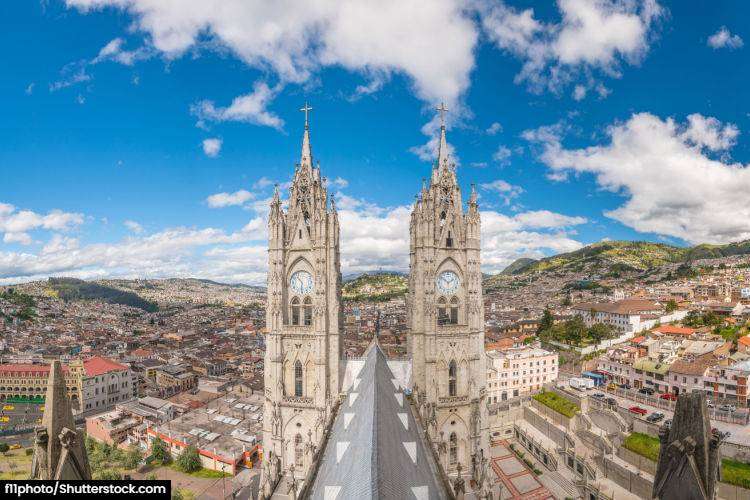
Arriving in Quito, you’ll notice the cooler climate. Sitting at an altitude of 2,850 meters, it’s one of the highest capital cities in the world. Quito is a charming city with a beautiful colonial old town that is UNESCO-listed. Its charm and amenities make it a popular destination for visitors to take Spanish language courses. From Quito, we take our only flight, a 1300 km westbound trip to the Galapagos Islands. Famous for its endemic flora and fauna, visiting these islands is a breathtaking and memorable experience.

On our return to Quito from the Galapagos Islands, we continue our journey south. Our next stop is the city of Banos, 175 km to the south of Quito. A very pretty small city, it’s an excellent base to explore the local area, which includes hot springs and the Tungurahua volcano. There’s also a wide range of treks in the area which come highly recommended. From Banos, we continue our journey south into Peru. 

Cathedral in Quito
Quito is home to a splendid colonial downtown area that is UNESCO listed

Peru - Cuzco, Machu Picchu, Arequipa and Vinicunca

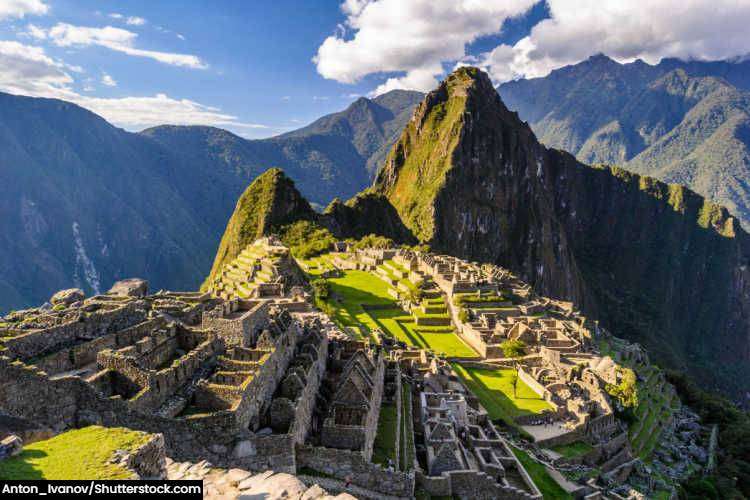
Our first stop in Peru is Cuzco after bypassing the bustling capital city of Lima. Cuzco is the former capital city of the Inca Empire, and it’s a treasure trove of archaeological sights and museums. As well as the Inca heritage, the Spanish have also left their mark on the city with various churches and colonial buildings. There’s plenty to keep you busy in Cuzco, but you must venture into the surrounding areas to experience Peru’s star attractions. The first of these is the fabled lost city of Machu Picchu, one of the seven wonders of the world. It’s a must-see attraction for any trip to Peru or South America. Machu Picchu is accessible for day trippers via Aguas Calientes, but undoubtedly the best way to see it is via the 26-mile hike along the Inca Trail.

The other standout attraction in the Cuzco area is Vinicunca, known as Rainbow Mountain. Only discovered in 2015 when the snow covering it melted, the mountain is a kaleidoscope of color. It’s well worth a visit, and it’s best done via a day trek from Cuzco.

After Cuzco, the route continues south to the city of Arequipa. The city is known as the ‘White City’ because of the color of the local volcanic stone used in its numerous grand colonial buildings. The city also occupies a spectacular setting in the valley next to the towering El Misti volcano. Arequipa is our final stop in Peru as we head east across the border into Bolivia and Lake Titicaca.

The view over the lost city of Machu Picchu after following the Inca Trail
One of the 7 wonders of the world, the lost city of Machu Picchu is one of Peru's highlights

Bolivia - Lake Titicaca and La Paz

Lake Titicaca straddles the border between Peru and Bolivia and is our first stop in Bolivia. The largest lake on the continent, it covers over 9000 sq km. Contrasting brilliantly with the vast altiplano that covers southern Peru and northern Bolivia, the area is excellent for hiking and water activities. There are numerous towns to base yourself in, including Copacabana on the mainland and Challapampa and Yumani on the Isla del Sol.

It’s a relatively easy 4-hour and 100 km trip from Lake Titicaca to Bolivia’s capital, La Paz. It’s the highest capital city in the world, and the altitude is noticeable on arrival. La Paz lacks the architectural splendor of other capital cities on the continent but makes up for it with its dramatic setting. Squeezed in between the neighboring mountains, you’ll find no inch of space is wasted in the city. Its numerous narrow streets, quirky shops, and alleyways make La Paz an intriguing destination to explore. 

Brazil - Pantanal, Rio de Janeiro and Iguazu Falls

From La Paz in Bolivia, we make our way east into Brazil. Passing through some of the remotest areas of South America, we eventually arrive in the city of Campo Grande. The city is the jumping-off point for exploring the nearby Pantanal area, one of Brazil’s significant ecological areas. The area includes the world’s most extensive tropical wetlands, and safari’s by either boat or horseback are popular. If you’re lucky, you’ll see an array of tropical birds, crocodiles, and perhaps even the elusive jaguars that inhabit the area. 

From Campo Grande, we head east to Brazil’s Atlantic coast and Rio de Janeiro. One of the world’s great cities, its numerous sights include Christ the Redeemer, Sugarloaf Mountain, and Copacabana Beach. It’s a wonderful place to spend time, no more so than during late February and early March when the city celebrates Carnival.

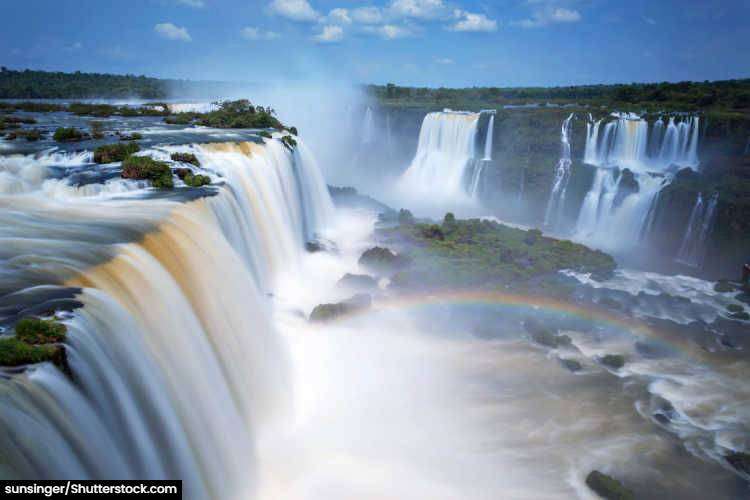
From Rio de Janeiro, we head southwest to the world-famous Iguazu Falls. Located between the borders of Brazil, Paraguay, and Argentina, the waterfalls are the largest waterfall system in the world. We’ve also included Iguazu Falls in our list of the alternative seven natural wonders of the world.

Aerial view of Christ the Redeemer Statue overlooking Rio de Janeiro
The Statue of Christ the Redeemer overlooks the Brazilian city of Rio de Janeiro

Paraguay - Asuncion

After Iguazu Falls, we hop across the border into Paraguay. This landlocked country is often overlooked and seldom visited by travelers. For those visitors that do visit,  they typically enjoy an authentic, unique experience and are warmly received.

Our itinerary only includes a single stop in the capital, Asuncion, possibly South America’s friendliest capital city. It’s not a bad place to base yourself for a few days to explore the city and the surrounding areas. Venturing out into the surrounding villages and towns gives a real insight into local life in South America.

View of the impressive Iguazu falls
The spectacular Iguaza waterfalls are located on the border between Paraguay, Brazil and Argentina

Argentina - Buenos Aires and Mendoza

From Paraguay’s capital city of Asuncion, we head south, across the Argentinian border and down to Buenos Aires. One of South America’s most famous and historic cities, it’s easy to spend a week or more enjoying the city’s architecture, sights, cuisine, and nightlife. The city is home to over 13 million people, but fortunately, most sights are concentrated downtown. If you feel you’ve overindulged on steak and wine during your visit to Buenos Aires, prepare yourself as we head west to Mendoza next.

The city of Mendoza is at the heart of Argentina’s wine country. This University city features wide boulevards, fine bars and restaurants. At a slight elevation, it’s also cooler than many of the surrounding areas.  It’s a popular place for visitors to stay for a few days and rejuvenate, enjoying fine wine and steak at bargain prices. If you’ve overindulged again, the good news is your next stop, Santiago in Chile, isn’t far away.

Buenos Aires in Argentina at sunset
Buenos Aires in Argentina is one of the liveliest cities in South America
Chile - Santiago, Torres del Paine and Ushuaia

Chile marks our 8th and final country on this itinerary. This coastal nation extends to 4300 km in length but never more than 350 km in width. Arriving in Santiago from Mendoza, we arrive around the midpoint of the country. You’ll immediately notice the difference in the look and feel of Santiago compared to other cities on the continent. While the colonial architecture remains consistent, Santiago resembles an American or European city. There’s enough to keep you busy in the city for a few days before resuming the journey south. 

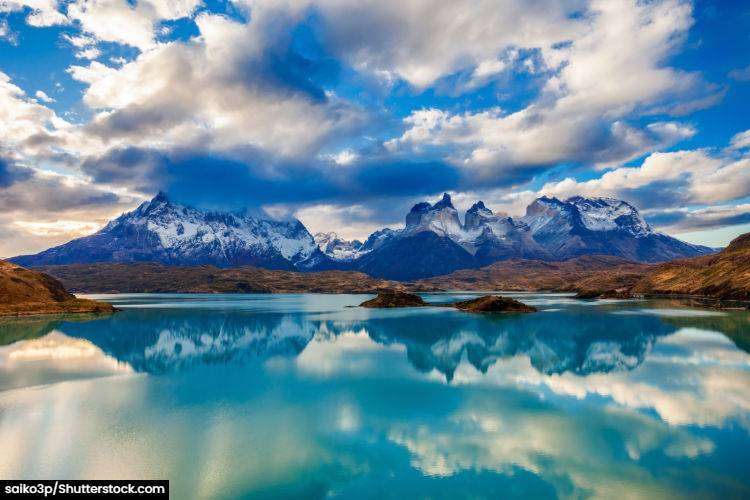
The next stop in Chile is Torres del Paine. This national park is one of the finest in South America, with spectacular mountains, glaciers, and turquoise lakes. Weather permitting, it’s a wonderful place to hike and climb.

From Torres del Paine, it’s a further 800 km to our final destination, Ushuaia, at the foot of South America. Just over the border back into Argentina again, this outpost city is in a spectacular location. It’s home to an array of winter sports, including skiing, climbing, and snowboarding. You can also visit several local glaciers, including Martial Glacier. For those of you who want to continue the journey south, it’s also the jump-off point for boats to Antarctica.

View across Torres del Paine park
Torres del Paine in Chile is an area of outstanding beauty with lakes, mountains and glaciers
Why not try some of our other guides?

We hope you’ve enjoyed our South America Overland trip guide. Why not try some of our other guides for South America or perhaps other intrepid travel destinations?

Related Content

Namibia Highlights Trip

Jordan 10 Day Itinerary

Yucatan Peninsula Trip

Long Weekend in Istanbul

Vancouver to Cabo Trip

Cairo to Cape Town Trip

South East Asia Travel Route

London Weekend Trip

Long Weekend in New York

Sudan Highlights Trip

Alexandria to Aswan

Koh Samui Guide

Latest Blog Posts

Can you Drive to Morocco?

You can drive to Morocco from the neighboring countries of Spain and Mauritania, but not Algeria, despite a nearly 2000 km long border between the two countries. Travel between Morocco and any of its neighbors comes with its fair share of challenges. At first glance, you could be mistaken for

10 Best National Parks in Western Australia

If you love solitude, amazing landscapes, and vast open spaces, you’re going to love Western Australia. This amazing land, and the northwest in particular, is often referred to as the ‘Last Frontier’. It’s a land of endless remote possibilities and nowhere showcases this better than the amazing array of national

17 Best Things to do in Vlore

The Albanian port city of Vlore is one of Albania’s spectacular coastal highlights. Situated at the northern end of the Albanian Riviera and overlooking the beautiful Bay of Vlore, the city is blessed with a wealth of attractions. The home of Albanian independence and the gateway to the Riviera, the

Can you Drive to Tuktoyaktuk?

You can drive to remote Tuktoyaktuk on the Arctic Ocean using the Inuvik-Tuktoyaktuk Highway, also known as the “Mackenzie Highway” or “Tuk Highway.” The road provides access to Tuktoyaktuk from Inuvik in the Northwest Territories. Inuvik is accessible from mainland Canada by using the Dempster Highway, which runs all the

Can you Drive to Gasparilla Island?

It’s possible to drive to beautiful Gasparilla Island from the nearby Florida mainland using a bridge known as the Boca Grande Causeway. The causeway connects the unincorporated community of Placida on the mainland to the northern tip of Gasparilla Island, allowing vehicles to access the island. There’s a $6 round

Can you Drive to Guyana?

You can drive to Guyana but only from one of the three South American countries with a common land border. The border crossing with neighboring Brazil in the southwest of Guyana is currently the only open crossing. However, it is located in a very remote region. There are currently no

Mastodon