Can you Drive to Venezuela?

You can drive to Venezuela from neighboring Brazil and Colombia as well as from the U.S. as part of an epic Pan-American road trip. However, any road trip to Venezuela shouldn’t be taken lightly, as there are considerable political issues and safety concerns. The fact the border with Colombia has only recently reopened to vehicles after years of political wrangling is a testament to this. In the east, the border with Guyana remains closed for the same reason. Meanwhile, in the south of the country, there’s just a single border crossing between Venezuela and Brazil. 

While it can prove challenging to reach Venezuela, those who undertake the trip are rewarded with a stunning country. The majestic Angel Falls is the highest waterfall in the world, while the long Caribbean coastline is home to many spectacular beaches and islands. There are also huge national parks to explore. You just need to make sure you’ve properly researched, prepared, and taken all the necessary precautions before you leave.

Where is Venezuela?

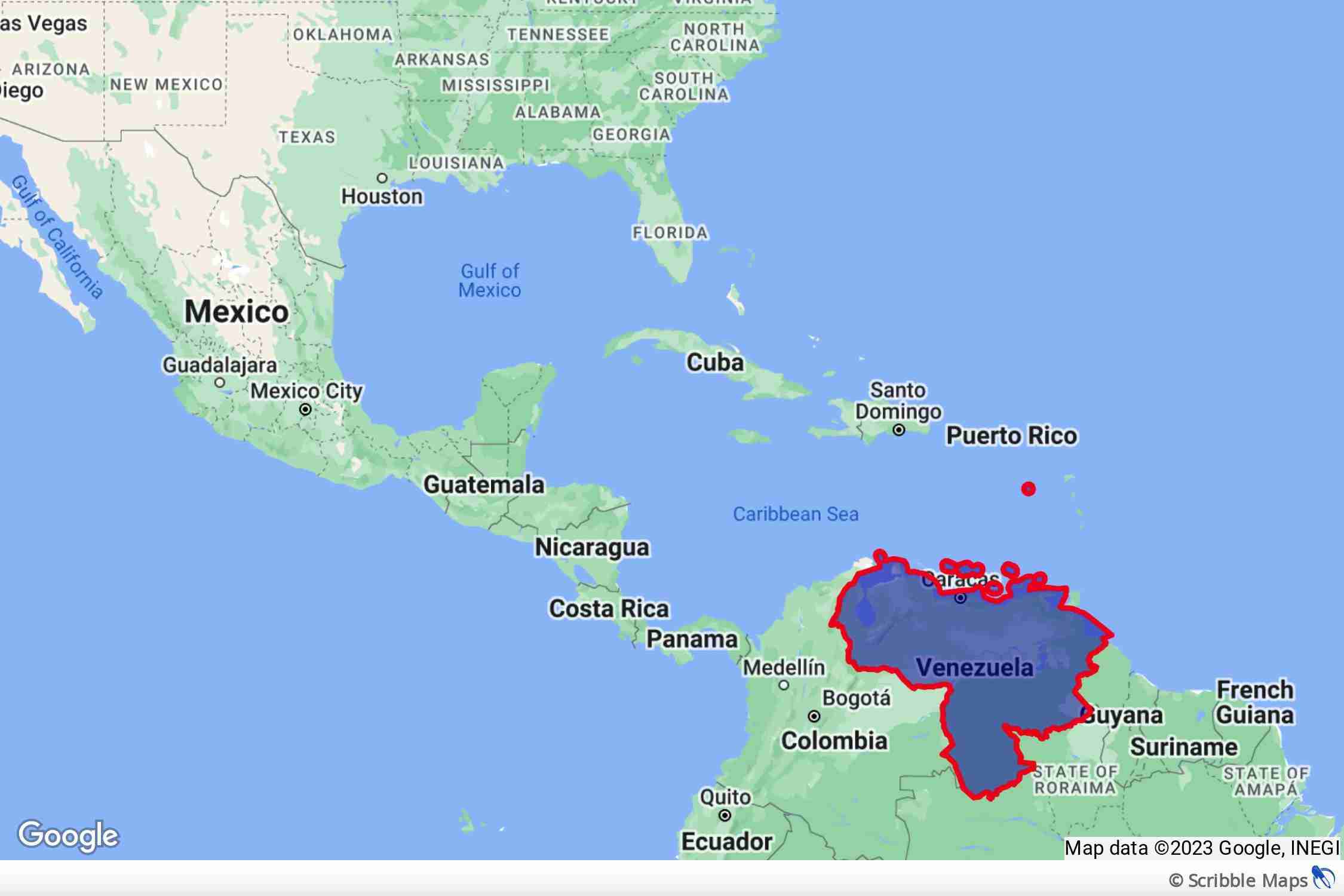
Venezuela is located in the northern part of South America. It shares extensive land borders with Colombia to the west, Brazil to the south, and Guyana to the east. In the north, Venezuela has a long coastline along the Caribbean Sea. The extensive coastline means Venezuela shares maritime borders with six different Caribbean States.

Map of Venezuela

The Best Route for Driving to Venezuela from the U.S.

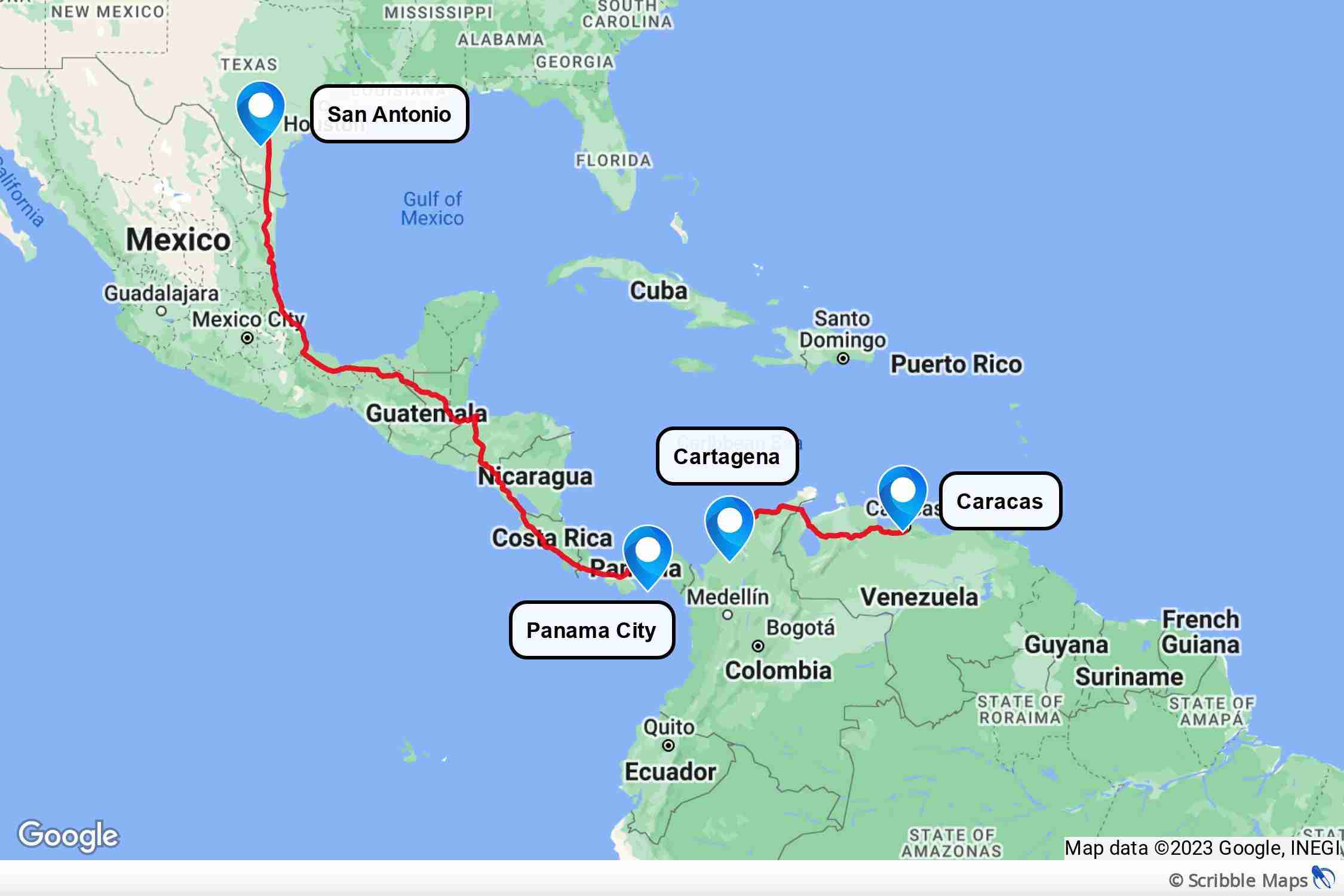
If you plan on driving to Venezuela from the U.S., you’ll follow the Pan-American Highway for much of your journey. This series of roads collectively form a highway that links Prudhoe Bay in the far north of Alaska with Ushuaia in the far south of Argentina. The only break in the road is in an area known as the Darién Gap in Panama.

Your journey from the U.S. will start with you crossing into Mexico via the border at Reynoso. From here, it’s a steady southbound journey along the east flank of Mexico. The route then takes you through Guatemala, Honduras, Nicaragua, Costa Rica, and Panama. In Panama, things get a little complicated, as there’s no road connection with Colombia in South America. Instead, you’ll need to ship your vehicle from  Panama to Colombia. 

Once you’ve got your car to Cartagena in Colombia, you follow an eastbound route towards Venezuela. You’ll cross the border at Paraguachón, and from here, it’s a further 12-hour drive to the capital city of Caracas. 

Crossing the Darién Gap

The Darién Gap is an area of impenetrable jungle located along the border of Colombia and Panama. There are no roads in the area and no border post, meaning that travel across the Darién Gap is completely out of the question. As the border between Panama and Colombia is the only land border between North America and South America, there are no alternative overland options. There’s further information on the possible options for getting your vehicle to South America in our dedicated guide.

How far is the Drive to Venezuela?

There’s no escaping that Venezuela is a long way from the U.S. by road. Even traveling from San Antonio, the closest major city in the U.S., requires a drive of nearly 3,500 miles. If you were to drive the route non-stop, it would take you more than 80 hours plus allowing time for shipping your vehicle from Panama to Colombia. The distances involved when traveling within South America aren’t small either, showing just how large and remote the final destination is.  

Starting Destination

Distance to Caracas, Venezuela

Driving Time

San Antonio

3499 miles

80 hours

Tucson

4372 miles

91 hours

San Diego

4775 miles

98 hours

Los Angeles

4852 miles

99 hours

Chicago

4678 miles

97 hours

New York

5231 miles

105 hours

Cartagena, Colombia

759 miles

20 hours

Bogota, Colombia

941 miles

24 hours

Boa Vista, Brazil

926 miles

23 hours

Is it Safe to Drive to Venezuela?

Driving through Central America to Venezuela is not without its challenges and risks. However, the risks of passing through these various countries are significantly less than those of visiting Venezuela. After a decade or more of economic and political turmoil, the country has become an unsafe place to visit. Violent crime is a significant problem, and tourists are not immune from being targeted.

If you’ve done your research and are comfortable with the risks of visiting Venezuela, then there’s no reason you shouldn’t undertake the trip. However, there are a few rules you should abide by to keep you safe on the way there and in Venezuela:

  1. Don’t drive at night
  2. Avoid city centers and be extra vigilant at traffic lights
  3. Plan your travel before leaving each day
  4. Pack water, supplies, and warm clothes in case of a breakdown
  5. Stick to the main highways and don’t venture off the beaten track


Following these simple rules’ll minimise the risk of anything untoward happening during your road trip.

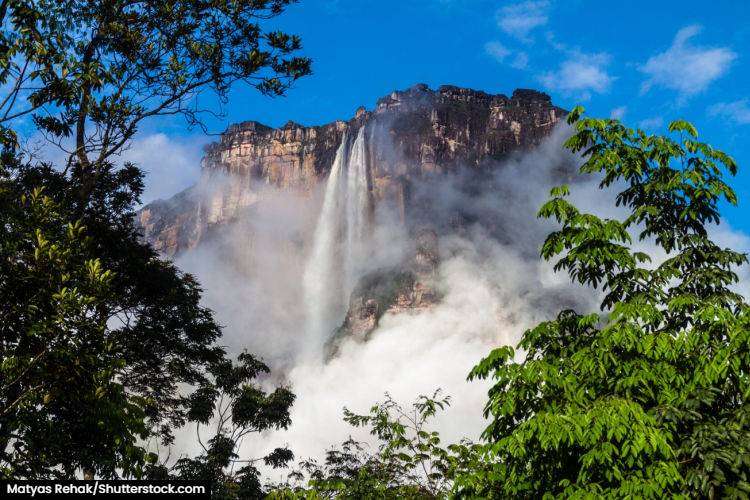
Cascading water at Angel Falls
Angel Falls is the largest waterfall in the world and Venezuela's premier attraction.

Best Things to see on the Journey to Venezuela

There are so many things to see on a road trip of these proportions that it’s hard to know where to begin. It’s especially hard as the route through Central and South America is awash with vibrant cities, ancient monuments, and spectacular volcanoes. Here’s a handful of some of the very best things to see on the drive to Venezuela:

Palenque, Mexico – The spectacular Mayan ruins at Palenque are among the best in Mexico or Central America. Parts of the enormous 15 square kilometer site date back almost 2000 years. You’ll need a day or longer here to see everything, such is the scale of the site.

Antigua, Guatemala – Pretty cobbled streets, colonial buildings, and some beautiful churches make this Guatemala’s prettiest town. The surrounding countryside is also pretty spectacular, with several imposing volcanos, including the Agua Volcano. If you’re fit and adventurous, you can climb to the top of this spectacular volcano.

La Fortuna Waterfall, Costa Rica – This spectacular waterfall stands at a height of 75 meters and is one of Costa Rica’s natural wonders. Set in beautiful jungle surroundings, it’s possible to hike to the top of the waterfall. Swimming in its impossibly clear but cold waters is also possible. 

Panama Canal, Panama – It’s probably the one thing we can all name in Panama, but familiarity shouldn’t detract from this engineering marvel. Located close to Panama City, you must see the enormous cargo vessels seemingly passing through an impossibly small waterway to believe it. 

Cartagena, Colombia – The old town of Cartagena is one of the gems of South America. A UNESCO World Heritage Site, the old town combines architecture, history, and charm to create an amazing destination. 

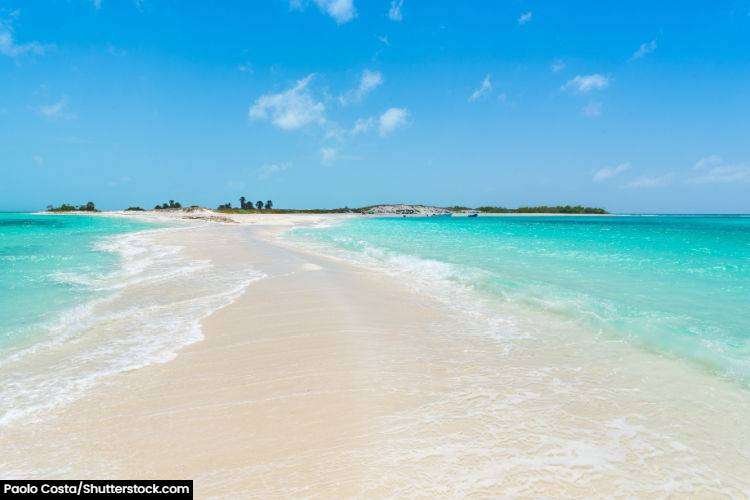
A long stretch of sand on Cayo de Agua Island
Venezuela's Caribbean coastline is home to spectacular islands and beaches.

Best Time to Visit Venezuela

Venezuela’s proximity to the Equator ensures that the country enjoys year-round warm temperatures. The temperature rarely drops below a comfortable 65°F, and daily highs are often in the high eighties. This means it’s t-shirt weather throughout the year in Venezuela. However, what’s far more variable is the country’s rainfall, and this dictates the best time to visit. 

Venezuela has a distinct wet season and dry season. The wet season runs from mid-April through November, while the dry season covers the remainder of the year, December through mid-April. It’s during this dry season that you should plan to visit. Days are typically warm, bright, and dry, ideal for exploring the national parks or relaxing on the numerous beaches. The wet season, in contrast, experiences heavy showers, often daily. Humidity also increases at this time of year, making conditions even more uncomfortable. 

Related Content

Best Time to Visit Uluru

Best Time to go to Darwin

Brisbane to Byron Bay Road Trip

Cairns to Cape Tribulation

Can you Drive to Australia?

Latest Blog Posts

Can you Drive to Morocco?

You can drive to Morocco from the neighboring countries of Spain and Mauritania, but not Algeria, despite a nearly 2000 km long border between the two countries. Travel between Morocco and any of its neighbors comes with its fair share of challenges. At first glance, you could be mistaken for

10 Best National Parks in Western Australia

If you love solitude, amazing landscapes, and vast open spaces, you’re going to love Western Australia. This amazing land, and the northwest in particular, is often referred to as the ‘Last Frontier’. It’s a land of endless remote possibilities and nowhere showcases this better than the amazing array of national

17 Best Things to do in Vlore

The Albanian port city of Vlore is one of Albania’s spectacular coastal highlights. Situated at the northern end of the Albanian Riviera and overlooking the beautiful Bay of Vlore, the city is blessed with a wealth of attractions. The home of Albanian independence and the gateway to the Riviera, the

Can you Drive to Tuktoyaktuk?

You can drive to remote Tuktoyaktuk on the Arctic Ocean using the Inuvik-Tuktoyaktuk Highway, also known as the “Mackenzie Highway” or “Tuk Highway.” The road provides access to Tuktoyaktuk from Inuvik in the Northwest Territories. Inuvik is accessible from mainland Canada by using the Dempster Highway, which runs all the

Can you Drive to Gasparilla Island?

It’s possible to drive to beautiful Gasparilla Island from the nearby Florida mainland using a bridge known as the Boca Grande Causeway. The causeway connects the unincorporated community of Placida on the mainland to the northern tip of Gasparilla Island, allowing vehicles to access the island. There’s a $6 round

Can you Drive to Guyana?

You can drive to Guyana but only from one of the three South American countries with a common land border. The border crossing with neighboring Brazil in the southwest of Guyana is currently the only open crossing. However, it is located in a very remote region. There are currently no

Mastodon