Jordan 10 Day Itinerary

A Desert Land Steeped in History

Landlocked in the center of the Middle East, Jordan is a small country with big attractions. Some of the mightiest armies and empires have passed through the country, each leaving their own distinct mark on the country. The Nabateans, Romans, Crusaders, and others have all left behind stunning monuments. The jewel in the crown is undoubtedly Petra, one of the seven modern wonders of the world. However, Jordan isn’t all about the past, it’s also home to some unique natural wonders. The desert landscape of Wadi Rum is magnificent, and the Dead Sea provides a surreal experience. In the south of the country, the beach resort of Aqaba provides outstanding diving and snorkeling.  All of this is packed into a country that is only 200 miles long. This 10-day itinerary will take in the best that Jordan has to offer.

Best Time to go to Jordan

Given its location in the Middle East, there is no bad time to visit Jordan. Year-round sunshine ensures warm temperatures for most of the country. From June until September, the weather is sweltering, making the spring or autumn the ideal time to visit. The winter is much cooler, especially at night. Rainfall is close to non-existent for most of the year. 

How Safe is Jordan?

Many of Jordan’s neighboring countries have suffered significant upheaval over the last 30 years. Conflicts in Lebanon, Syria, Egypt, and Iraq have threatened to spill over into Jordan, but fortunately, none have. Jordan remains a stable, peaceful, and largely safe country to visit and travel in. A strong police and military presence throughout the country ensures the safety of Jordan’s people and visitors alike.

The Monastery building at Petra in Jordan
The iconic view of the Monastery building in Petra

Jordan Travel Route

As overland travel in the Middle East can be difficult, we’ll assume a flight in and out of Amman for this itinerary. After visiting the sites of Amman, the route will take us north to the Roman ruins of Jerash before we head south to the Dead Sea and the Crusader castles at Shobak and Karak. The route then takes us down to the wonders of Petra. Next, we take in the desert at Wadi Rum and the Red Sea beaches at Aqaba.

Amman

Amman marks the start of your adventure. It’s a 35 km and one-hour trip from the airport into town by either bus or taxi. Amman is a notably low-key city, somewhat surprising for a country with such a rich heritage. The city is primarily made up of pragmatic residential districts with a few incursions by modern buildings in keeping with other Middle Eastern cities. The lack of architectural merit doesn’t mean the city is without attractions, and it’s worth spending a day or two to settle in and explore. 

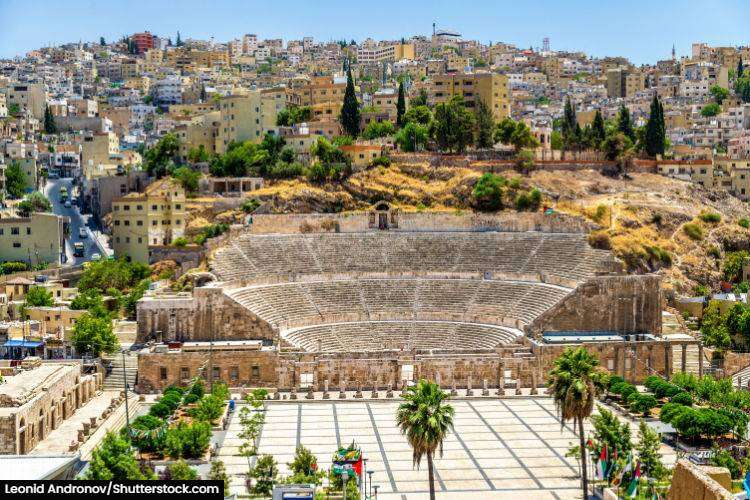
The Roman Theatre in Amman
Old meets new in Amman with the Roman Theatre surrounded by modern residential buildings

Things to do in Amman

1. Roman Theatre – Undoubtedly, the most spectacular of Amman’s attractions is the Roman theatre, built in the 2nd century AD. Capable of holding up to 6,000 people, the theatre is impeccably preserved. 

2. The Citadel – Sitting on Amman’s highest hill, the Citadel is another must-see attraction. Buildings constructed in the 1st century AD to the 7th century AD can be found here, with the Temple of Hercules our top pick. The Citadel also affords magnificent views across Amman, so a visit in the late afternoon or sunset is highly recommended.

3. King Abdullah Mosque – Constructed in the 1980s, the King Abdullah Mosque is the standout mosque in Jordan. Accessible for non-Muslims for a 2 JD entrance fee, it’s worth seeing the large blue mosaic dome and towering minarets.

4. Rainbow Street – Amman’s liveliest thoroughfare, Rainbow Street is home to shops, bars and restaurants. The smell of Shisha pipes and Shawarma permeates the air. If you’re spending an evening or more in Amman, this is the perfect place to do it.

Jerash

From Amman, you’ll be heading north to the Roman ruins at Jerash. It’s possible to stay locally near Jerash or take a day trip from Amman, as it’s only 50 km away. If not for Petra, Jerash would surely have a much higher profile in Jordan, and further afield, such is the ancient city’s beauty.  
 
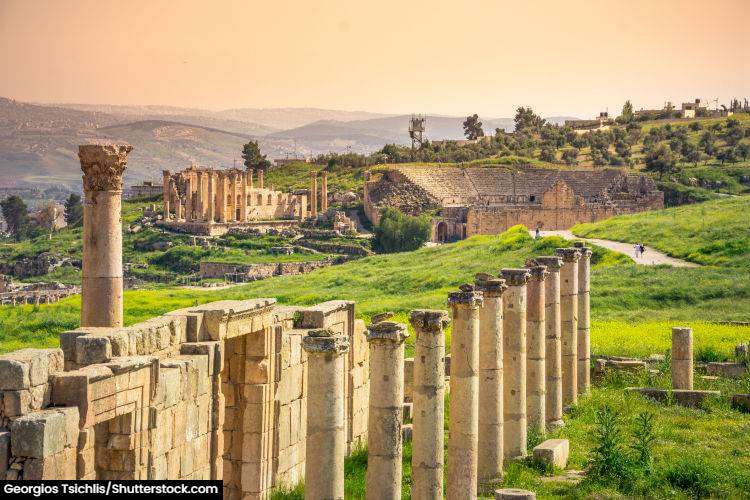
In its heyday of the 3rd and 4th century AD, Jerash was home to up to 20,000 people. Despite an earthquake in the 7th century AD, the ruins are still well preserved.  The ruins are set over a large site, so allow 3 to 4 hours to see everything. Highlights include the Temple of Artemis, Hippodrome, Hadrian’s Arch, and Oval Plaza. Collectively, the buildings give you a real sense of what the city would have been like at its peak.
The Roman City of Jerash in Jordan
A view across the Roman City of Jerash with the impressive theatre in the background

Dead Sea

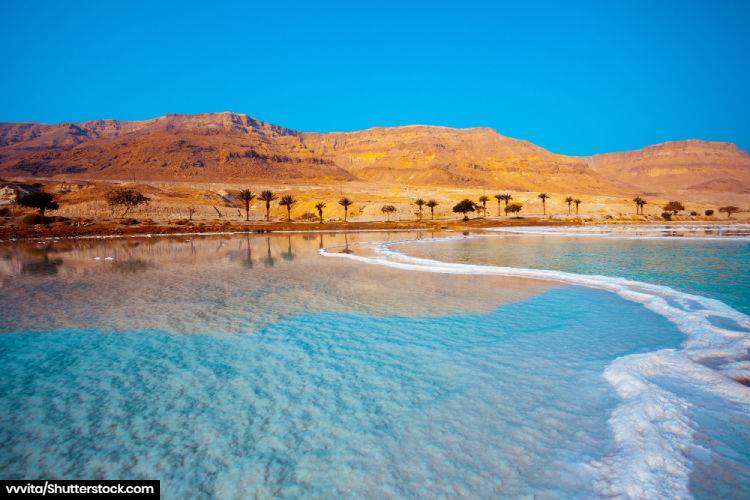
The Dead Sea is a bucket list destination for many and another must-do attraction in Jordan. As the lowest place on earth, the sea is up to 8 times saltier than normal seawater. The result of this? Buoyancy, unlike anything you’ve experienced before! There’s a large number of resorts along the coast offering swimming pools, shade, and showers, which are essential after a dip. You can access the Dead Sea outside these resorts, but shade and other amenities are hard to come by. Much like Jerash, it’s possible to take a day trip from Amman, but we’d recommend stopping on the way to Karak.

The dead sea surrounded by mountains and desert
A swim in the Dead Sea is a bizarre experience but is a bucket list item for many visitors

Karak and Shobak

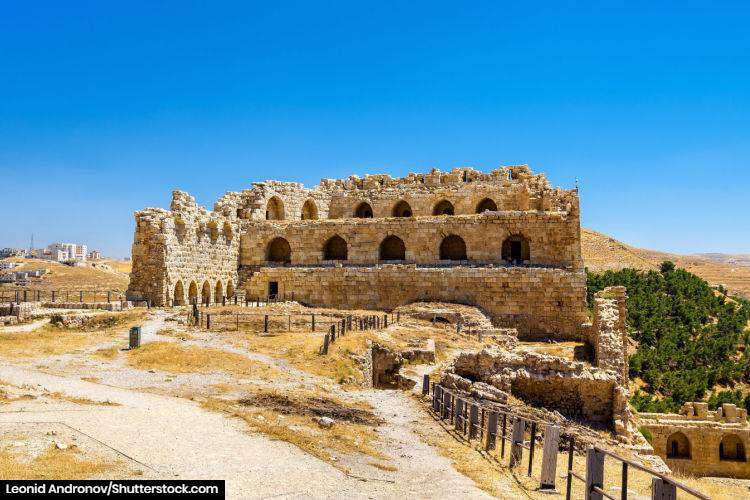
The Crusader Castles at Karak and Shobak provide a fascinating stopover on your route south towards Petra. Both castles were part of a more extensive line of fortifications built by the Crusaders to protect the holy land. The ruins at Karak, in particular, are well-preserved and offer great views across the valley. It’s a great site to explore for an hour, and the town is a good place for a stopover. The town offers a good range of accommodation and restaurants.

The crusader castle at Karak
Incredibly well preserved, the Crusader Castle at Karak is a great stopover

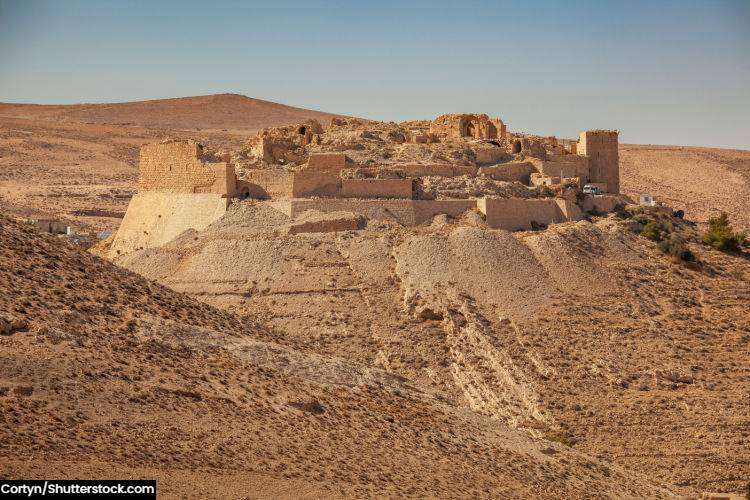
The castle at Shobak occupies a desolate hilltop a few kilometers south of Karak. While not as well preserved as Karak, it is much more evocative. This is precisely how you would imagine a desert castle to be. A highlight of any visit is the incredible escape tunnel that runs through the hill and surrounding grounds before resurfacing away from the castle. Be sure to come equipped with a torch!

Shobak is an ideal short stopover on the way to Petra from Karak. Accommodation and amenities in this remote area are minimal, making a passing stopover necessary.

The crusader castle at Shobak
The Crusader Castle at Shobak sits a top a hill in a desolate area of desert and affords spectacular views

Petra

It’s difficult to describe the feeling as you set foot in Petra and catch a glimpse of the world-famous Treasury building. Entering through a canyon that extends to over a kilometer, the sense of tension builds until you get that first glimpse. The Nabateans constructed the Treasury and city in the 3rd century BC. An important trade hub, Petra was occupied until the 6th century AD when it was deserted following a massive earthquake. The city lay desolate and empty until its rediscovery in the 19th century. There are many must-see sites within Petra, and it’s certainly not a small site. Top of the must-see buildings is the Treasury, followed closely by the Monastery. The Theatre and Street of Facades are also highlights. 

For many, a day in Petra isn’t enough, and we’d definitely recommend two days or more. While it’s possible to see all of the most important landmarks in a day, much of the magic of the red city is from exploring its quieter area. Numerous paths and routes allow you to walk and hike around the city, providing multiple vantage points. There’s also much to discover away from the larger tour groups, which frequent the main sights. 

Wadi Musa, the present-day town close to Petra, has a good range of hotels and restaurants. There are also several travel agencies and tour operators that you may want to use for the next leg of your trip down to Wadi Rum.

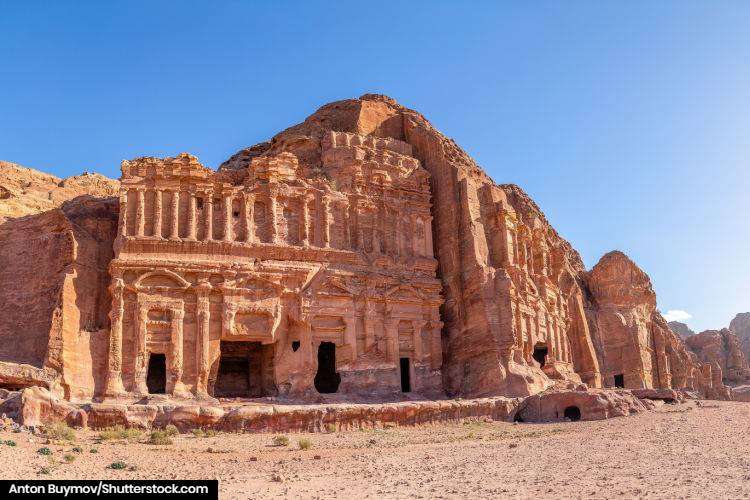
The Palace Tomb carved into the rock at Petra
Petra is one of the 7 great wonders of the world for a good reason with a number of incredible rock carved buildings

Wadi Rum

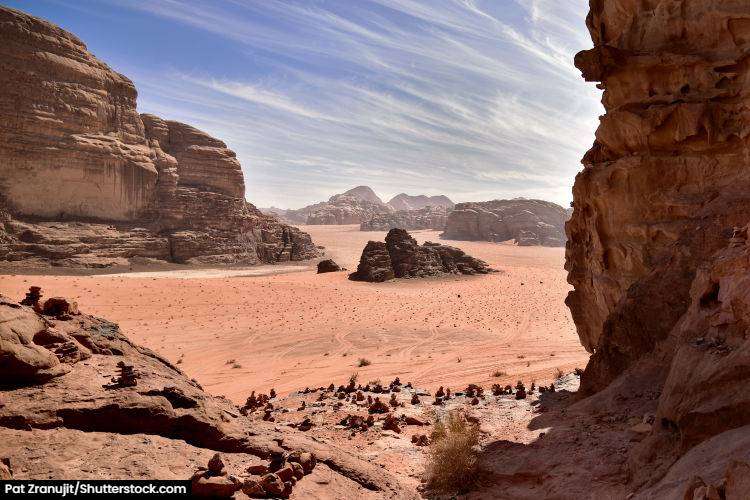
It’s a 2-hour drive and over 100 km on the King’s Highway to Wadi Rum from Petra. Made famous as the location for the movie Lawrence of Arabia, this is dramatic desert scenery at its best. Entry to the conservation area is only possible as part of a tour, and it’s highly recommended to stay in the desert overnight. Aside from the experience of staying in a Bedouin camp, you’ll also get to see the desert at its most dramatic. Both sunrise and sunset see an explosion of color, which are also the best times for hiking. 

The desert at Wadi Rum
The sand dunes, rock formations and colours of Wadi Rum make this a spectacular location

Aqaba

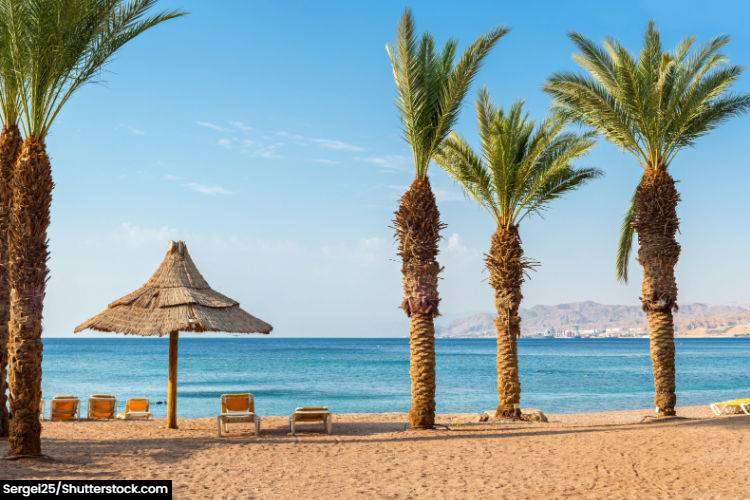
Our final stop on the itinerary is the beachside town of Aqaba, an hour south of Wadi Rum. After a week in the desert, it’s great to see the turquoise waters of the Red Sea. Along with the beaches, the underwater world at Aqaba draws most people in. The diving and snorkeling here are excellent, and there are many established operators in the area. It’s a nice place to kick back and relax for a day or two before returning to Amman. 

The sandy beaches of Aqaba on Jordan's Red sea coast
The Red Sea beach resort of Aqaba offers world class diving and snorkelling trips
Why not try some of our other guides?

We hope you’ve enjoyed our Jordan 10 Day itinerary guide. Why not try some of our other guides for Asia or perhaps some of our other intrepid travel destinations?

Related Content

Namibia Highlights Trip

Yucatan Peninsula Trip

Long Weekend in Istanbul

Vancouver to Cabo Trip

Cairo to Cape Town Trip

South East Asia Travel Route

London Weekend Trip

Long Weekend in New York

Alexandria to Aswan Trip

Sudan Highlights Trip

Related Content

Can you Drive to Morocco?

You can drive to Morocco from the neighboring countries of Spain and Mauritania, but not Algeria, despite a nearly 2000 km long border between the two countries. Travel between Morocco and any of its neighbors comes with its fair share of challenges. At first glance, you could be mistaken for

10 Best National Parks in Western Australia

If you love solitude, amazing landscapes, and vast open spaces, you’re going to love Western Australia. This amazing land, and the northwest in particular, is often referred to as the ‘Last Frontier’. It’s a land of endless remote possibilities and nowhere showcases this better than the amazing array of national

17 Best Things to do in Vlore

The Albanian port city of Vlore is one of Albania’s spectacular coastal highlights. Situated at the northern end of the Albanian Riviera and overlooking the beautiful Bay of Vlore, the city is blessed with a wealth of attractions. The home of Albanian independence and the gateway to the Riviera, the

Can you Drive to Tuktoyaktuk?

You can drive to remote Tuktoyaktuk on the Arctic Ocean using the Inuvik-Tuktoyaktuk Highway, also known as the “Mackenzie Highway” or “Tuk Highway.” The road provides access to Tuktoyaktuk from Inuvik in the Northwest Territories. Inuvik is accessible from mainland Canada by using the Dempster Highway, which runs all the

Can you Drive to Gasparilla Island?

It’s possible to drive to beautiful Gasparilla Island from the nearby Florida mainland using a bridge known as the Boca Grande Causeway. The causeway connects the unincorporated community of Placida on the mainland to the northern tip of Gasparilla Island, allowing vehicles to access the island. There’s a $6 round

Can you Drive to Guyana?

You can drive to Guyana but only from one of the three South American countries with a common land border. The border crossing with neighboring Brazil in the southwest of Guyana is currently the only open crossing. However, it is located in a very remote region. There are currently no

Mastodon